
Empire, Extraction, and the Global Majority: Mapping the Invisible Chains of U.S. Domination
How a tiny transnational elite and its imperial proxies control the lives of billions while the global majority labors in silence

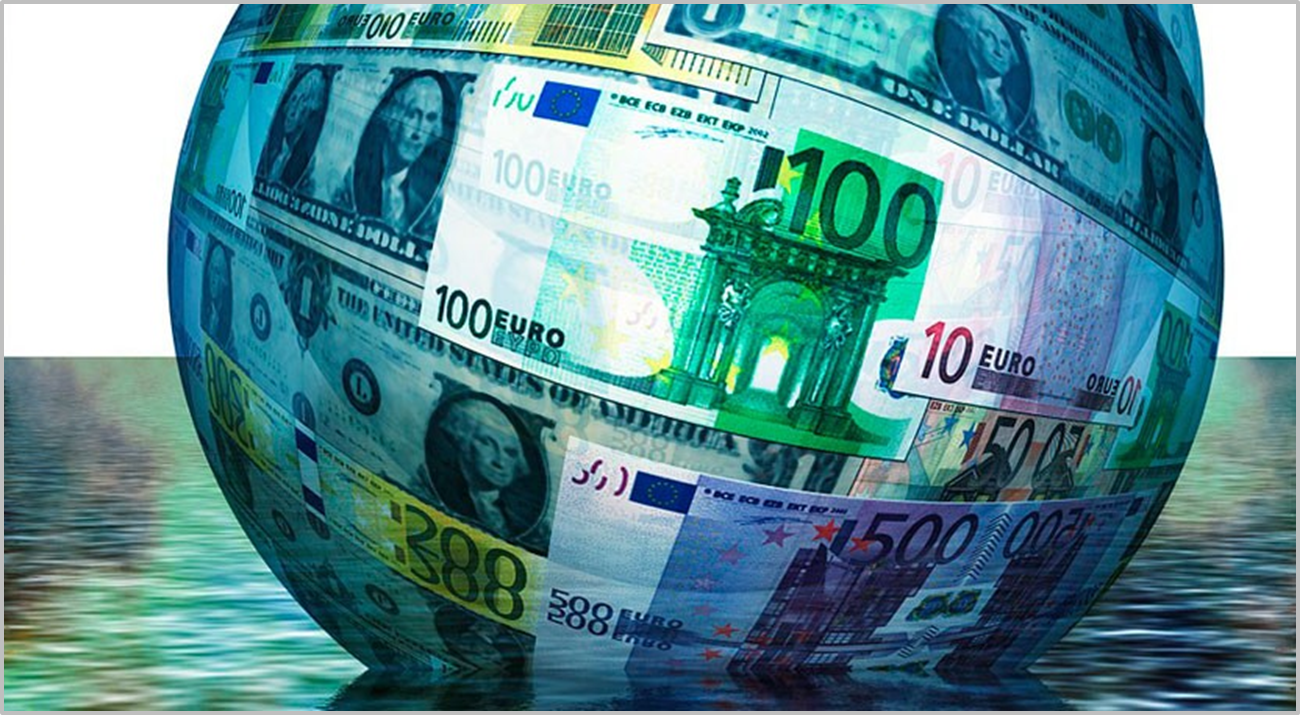
For five hundred years, empires have plundered humanity, but today the machinery of oppression is invisible, global, and far deadlier: the U.S. empire and its transnational capitalist masters control nearly one-third of the world while billions endure extraction, exploitation, and dispossession.
Introduction: The Illusion of Freedom Under Empire
At first glance, the world appears fragmented into sovereign states, free markets, and democratic governance. Television screens, social media feeds, and the endless chatter of think tanks would have us believe that power is dispersed, that nations act independently, and that markets operate neutrally. These illusions mask a brutal reality: the global economy, military networks, and ideological apparatus are tightly controlled by a tiny fraction of humanity—the transnational capitalist class—who orchestrate extraction, enforce compliance, and secure their dominance under the thin veneer of liberal democracy.
Today, roughly 8.3 billion human beings inhabit this planet. Of these, only 15 percent reside under direct U.S. imperial influence, from the continental United States to its overseas territories and client states. But the empire’s reach extends far beyond its core: through military aid, financial leverage, corporate power, and coercive diplomacy, an additional 1.5 billion live under peripheral influence, while the remaining majority of humanity—the global 85 percent—experiences the indirect consequences of imperial extraction.
This is not incidental. It is structural, deliberate, and historically contingent. From the Spanish and British colonial systems to the industrial revolutions that concentrated wealth in Europe and North America, the logic of imperial accumulation has evolved. Today, the empire functions less through visible conquest than through globalized bureaucracy, transnational corporations, and financialization, while the ideology of liberalism masks its violence.
The Transnational Elite: Invisible Masters of the World
At the pinnacle of this global hierarchy sits a class so small it is almost invisible. The transnational elite—the billionaires, banking dynasties, tech oligarchs, and policy planners of Davos, BlackRock, and Goldman Sachs—control the levers of finance, technology, media, and global governance.
Their tools are manifold:
Finance: Asset management, derivatives, central bank influence, and control of international loans through institutions like the IMF and World Bank.
Technology: AI, logistics, cloud infrastructure, and social media platforms that monitor, predict, and shape human behavior.
Media & Ideology: Hollywood, mainstream news, and global entertainment cultivate consent while silencing dissent.
Military & Law: Coordination of client states, private security contractors, and international legal systems ensure compliance.
Through these mechanisms, wealth is extracted upward, obedience is enforced downward, and the transnational elite can shape global society without ever appearing on a ballot or speaking to a citizen. This is a borderless empire, whose interests do not reside in any single nation-state but in the continuity of extraction and accumulation.
The U.S. Empire: Middle Management of Global Exploitation
While the elite orchestrate, the United States functions as the operational core of their global machinery. Roughly 1.3 billion people reside within the core empire, including U.S. territories, client states, and NATO allies. These populations act as the middle managers of exploitation, implementing the elite’s policies through militaries, bureaucracies, corporate networks, and ideological institutions.
Consider the geography of control:
Directly controlled core: U.S., Puerto Rico, Guam, U.S. Virgin Islands, Northern Mariana Islands, American Samoa. These zones host military bases, provide strategic outposts, and extract wealth from local populations through taxation and debt.
Strong influence protectorates: Japan, South Korea, Taiwan, the Philippines, Germany, Italy, UK, Spain, Belgium, Netherlands, Norway, Denmark, Greece, Poland, Turkey. Here, military alignment, financial integration, and corporate control enforce compliance and project power regionally.
Moderate NATO-aligned states: Canada, Portugal, Czechia, Hungary, Romania, Bulgaria, Slovakia, Baltic states. These nations coordinate with empire policies, providing logistical, political, and financial support without direct occupation.
This empire is not simply a collection of states; it is a global operational machine. It guarantees the smooth extraction of resources, labor, and capital while maintaining a veneer of liberalism, democracy, and partnership. The populations within this core receive partial benefits—relatively higher living standards, social services, or technological infrastructure—but these are dividends of their role in enforcing extraction elsewhere.
Peripheral Influence: The Reach of Empire Beyond Borders
The empire’s reach does not stop at its core. Through economic coercion, debt dependency, military aid, and corporate penetration, the U.S. extends influence over an additional 1.5 billion people across the global south, East and Southeast Asia, Latin America, Africa, and the Middle East.
Examples include:
Latin America: Mexico, Colombia, Brazil, Argentina, Chile, Peru, Venezuela
Middle East: Iraq, Syria, Lebanon, Jordan, Saudi Arabia, UAE, Qatar, Egypt, Morocco
Africa: Kenya, Nigeria, South Africa
Asia: Pakistan, India, Indonesia, Thailand, Vietnam
Here, imperial power is subtle but brutal: it may not involve direct governance, but it guarantees compliance and ensures that the profit flows to the elite. These populations experience both coercion and partial integration, their labor and resources feeding global capitalism while local autonomy is constrained.
The Global Majority: Exploited and Fragmented
Beyond the empire and its peripheral network, roughly 5 billion people live outside direct U.S. control. Yet, they are still ensnared in the web of transnational extraction: their labor fuels global supply chains, their resources feed corporate profits, their markets stabilize financial flows, and their environment is plundered for industrial consumption.
The global majority is structurally disempowered:
Fragmented labor movements, obstructed by borders and surveillance.
Cultural manipulation and media narratives that obscure the reality of exploitation.
Debt, war, and climate pressures that reinforce dependency on imperial and corporate structures.
Despite this, the global majority is the true power in potential: it produces the wealth, operates the infrastructure, and sustains life on the planet. The challenge for revolutionary movements is to transform fragmentation into solidarity and convert productive capacity into organized power.
Mechanisms of Control
The empire operates through five interconnected levers:
Military Force – Bases, interventions, proxy armies, private security contractors.
Economic Coercion – Trade agreements, debt, sanctions, financialization.
Corporate Networks – Global supply chains, tech infrastructure, industrial consolidation.
Ideology & Media – Cultural hegemony, news, education, social media.
Legal & Diplomatic Tools – Puppet governments, international courts, conditional aid.
These mechanisms are mutually reinforcing, producing a system that is resistant to localized resistance but vulnerable to coordinated global struggle.
Historical Continuity: 500 Years of Exploitation
The U.S. empire is the latest iteration of five centuries of transnational accumulation:
Colonial conquests in the Americas, Africa, and Asia
Slave trade and plantation economies
Industrial capitalism and modern nation-states
Globalized empire of finance, AI, and militarized capitalism
The logic is constant: a tiny elite profits from the labor and dispossession of the many. History teaches that resistance emerges from understanding these structural realities.
The Revolutionary Imperative
For the Marxist-Leninist-Maoist, analysis is tactical. The fight is against the system itself: a transnational capitalist class enforced through empire. Revolutionary strategy requires:
Exposing elite networks
Building solidarity across borders
Disrupting extraction (labor, supply chains, anti-imperialist struggle)
Creating alternative governance structures
Ideological clarity
Only through global, organized struggle can the empire be dismantled and the global majority empowered.
Mind-Map of Global Domination
Transnational Elites (~0.01–0.1%)
├─ Billionaires, Banking Dynasties, Koch Network, Tech Oligarchs, Davos Planners
│ ↓ leverage
├─ Corporations & Financial Networks
│ ├─ BlackRock, Vanguard → Global assets, pensions, utilities
│ ├─ JPMorgan, Goldman Sachs → Banking, loans, monetary policy
│ ├─ Koch Network, ExxonMobil, Chevron → Energy, lobbying
│ ├─ Amazon, Google, Meta, Microsoft → Tech, AI, logistics
│ ├─ Disney, Comcast, News Corp → Media & culture
│ └─ IMF, World Bank → Loans, debt, structural adjustment
│ ↓ enforce policies on
├─ U.S. Empire & Core Client States (~1.3B)
│ ├─ Core Empire (Direct Control): U.S., Puerto Rico, Guam, USVI, Northern Mariana Islands, American Samoa, Japan, S.Korea, Taiwan, Philippines, Germany, Italy, UK, Spain, Belgium, Netherlands, Norway, Denmark, Greece, Poland, Turkey
│ └─ NATO Allies (~108M): Canada, Portugal, Czechia, Hungary, Romania, Bulgaria, Slovakia, Baltic states
│ ↓ projects influence onto
├─ Peripheral / Soft Influence States (~1.5–1.6B): Mexico, Brazil, Argentina, Chile, Peru, Venezuela, Iraq, Syria, Lebanon, Jordan, Saudi Arabia, UAE, Qatar, Egypt, Morocco, Kenya, Nigeria, South Africa, Pakistan, India, Indonesia, Thailand, Vietnam
│ ↓ enforces extraction on
└─ Global Majority (~5B): Workers, farmers, miners, laborers under extraction, debt, environmental degradation
Sources & Further Reading
Transnational Elites & Corporate Control
Robinson, William I. – Global Capitalism and the Crisis of Humanity (Layer 1 & 2)
Chomsky, Noam – Profit Over People (Layer 2 & 3)
McKenzie, Dane – The Grayzone investigations (Layer 2)
U.S. Empire & Military Enforcement
Johnson, Chalmers – Blowback (Layer 3)
Boot, Max – Invisible Armies (Layer 3)
SIPRI & CSIS military/aid data (Layer 3)
Peripheral / Soft Influence States
Harvey, David – The New Imperialism (Layer 4)
IMF & World Bank structural adjustment reports (Layer 4)
Klein, Naomi – The Shock Doctrine (Layer 4)
Global Majority & Exploitation
ILO reports (Layer 5)
Global Witness / Corporate Accountability publications (Layer 5)
Local labor unions, NGO reports, anti-imperialist research (Layer 5)
Marxist-Leninist-Maoist Foundations
Marx, Karl – Capital Vols. 1–3
Lenin, Vladimir – Imperialism, the Highest Stage of Capitalism
Mao Zedong – Selected Works