
War profiteers: the Trump system

Today I am providing my English translation of an article by Margherita Furlan, originally in Italian and published on AntiMafiaDuemila.com (link broken1) on Sunday 19th April 2026.
(All formatting original, footnotes mine).
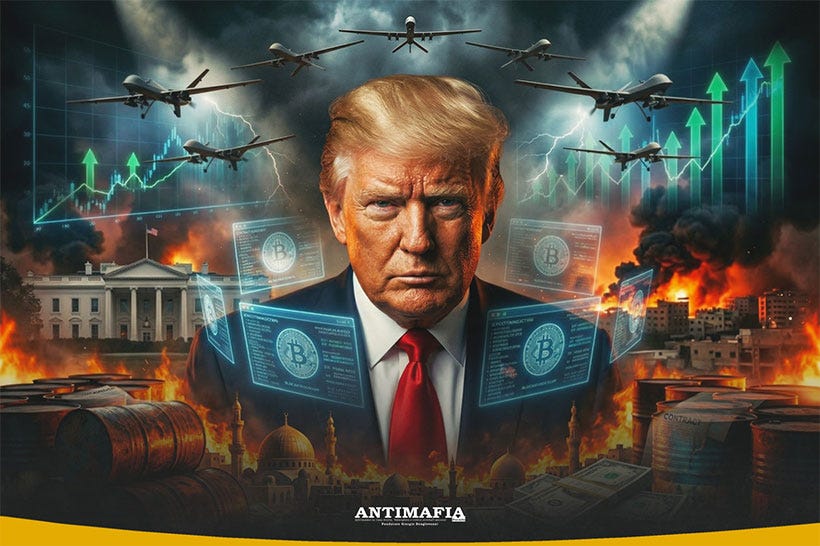
There is one question that no Pentagon briefing, no White House press conference, no Washington Post editorial dares to ask in its starkest form: cui prodest? [Latin for “who benefits?”] Who stands to gain from this war? Not in terms of general geopolitics — we know those, we have analysed them, we have broken them down into their energy, military and eschatological components. The question is simpler, more brutal, more American: who stands to gain in Dollars?
The answer is documented. It is not a matter of speculation, nor is it the stuff of social media conspiracy theories. It is written in the filings of the Securities and Exchange Commission [SEC], in the investigations of the Financial Times, in the reports of the staff of the House Judiciary Committee, in the trackers of the Center for American Progress, in the pages of the Wall Street Journal. It is an answer that has names, surnames, figures, dates and corporate structures. And it tells a story that is unprecedented in the history of the American presidency.
Wealth: from decline to growth
To grasp the scale of what is happening, we need to start with a piece of background information that makes the rise even more staggering. When Donald Trump first entered the White House in January 2017, Forbes estimated his net worth at around $3.5 billion, built up over decades through the Trump Organisation’s traditional property empire: hotels, resorts, golf courses, brand licensing and residential towers. By the time he left office in January 2021, that fortune had shrunk by about a third. Forbes documents the decline year by year: $3.5 billion in 2017; $3.1 billion in 2018 and 2019; $2.1 billion in 2020 – the lowest point – and a slight rebound to $2.4 billion in 2021. Bloomberg estimated an even lower figure: around $2.3 billion at the time of his departure from the White House.
The decline was mainly linked to the pandemic’s impact on hotels, office towers and golf resorts. Remote working crushed commercial property values, tourism dried up, and the fallout from 6th January [2021 Capitol attack] led institutions such as Deutsche Bank to distance themselves from the Trump Organisation. The humiliation was also symbolic: for the first time in 25 years, Trump’s wealth was not enough to feature in the “Forbes 400” – the ranking of the 400 richest Americans – failing to reach the entry threshold of $2.9 billion.
Five years on, the picture is unrecognisable. According to Forbes, Trump’s net worth has grown by around $3 billion in the last year alone, reaching an estimated total of $7.3 billion. Compared to the low point of 2020, his wealth has more than tripled. But the composition of that wealth has changed radically. It is no longer Manhattan skyscrapers or Florida resorts driving the figures. The majority of the new wealth comes from crypto ventures managed by the Trump family — a financial ecosystem that did not exist during the first term and which has been built in parallel with the administration’s policy decisions.
According to Bloomberg, digital assets have added $1.4 billion to the presidential family’s wealth over the past year, coming to account for around a fifth of their total fortune. But this estimate is likely conservative. The report by the Democratic staff of the House Judiciary Committee, published in November 2025 under the supervision of Ranking Member Jamie Raskin, provided far higher figures: the Trump family’s crypto holdings could be worth up to $11.6 billion, with over $800 million in revenue from the sale of crypto assets in the first half of 2025 alone.
Eric Trump (the third son of the current occupant of the White House), when asked by the Financial Times about the investigation estimating the family’s crypto profits at over $1 billion pre-tax, replied that the actual figure was “probably more”.
From $2.1 billion at its lowest point to $7.3 billion – and perhaps much more – in the midst of a war. This is not an economic recovery. It is a genetic mutation of power. World Liberty Financial: the heart of the system.
At the centre of the Trump family’s financial architecture lies World Liberty Financial, a decentralised finance platform co-founded by the president and his three sons – Donald Jr., Eric and Barron – alongside Steve Witkoff and his sons. Witkoff is no ordinary figure: he is the White House Special Envoy for the Middle East and Peace Missions, the man who was received at the Kremlin and, at the same time, sat at the negotiating table in Geneva (Switzerland) with Iran in the days immediately preceding the start of military operations. The ownership structure is revealing. The Trump family controls around 40% of the company through a complex ownership structure, with various entities tracing back to the Trump Revocable Trust. World Liberty Financial issues both governance tokens (WLFI) and stablecoins (USD1), generating revenue through trading fees and interest on Treasury bonds that back the stablecoins. The Financial Times has estimated that World Liberty Financial has generated over $550 million in sales of its WLFI token, with investments coming from figures such as Chinese crypto billionaire Justin Sun and funds linked to the United Arab Emirates [UAE]. And here the story ceases to be a matter of speculative finance and becomes a matter of national security.
Money from the Gulf: the chain of transmission
The flow of money from the Persian Gulf States into the Trump-Kushner sphere is at the heart of this whole affair. Not because it is illegal – the formal legality of many of these transactions is one of the most disturbing features of the system – but because it maps out a network of interests that overlaps with surgical precision with the map of foreign policy decisions. Saudi Arabia. The Saudi sovereign wealth fund PIF [Public Investment Fund] invested $2 billion in Affinity Partners, Jared Kushner’s private- -equity fund, in 2021. The PIF’s internal screening committee had recommended rejecting the proposal, citing “inexperience” and “excessive” fees. The recommendation was overruled directly by Mohammed bin Salman, who chairs the PIF’s board of directors. The management fees generated by this single investment are enormous: the PIF pays Kushner 1.25% of the investment, or $25 million a year. The Senate Finance Committee estimates that Kushner will receive a total of $137 million in management fees from the PIF by August 2026. But the Saudi link does not run solely through Kushner. A few weeks before the start of the war with Iran, the PIF financed a $7 billion property development deal in Saudi Arabia with the Trump Organisation. The project, part of the Diriyah mega-complex funded entirely by the PIF, includes a Trump-branded hotel, a golf course and 500 luxury villas priced between $6.7 million and $24 million each. Trump retains full ownership of the Trump Organisation and will profit from the deal through brand licensing fees. The timing is key: in the weeks leading up to the conflict, Crown Prince Mohammed bin Salman had repeatedly urged Trump to attack Iran, concerned about the growing military capabilities of his main regional rival. United Arab Emirates. The Emirati connection runs just as deep. The UAE has invested around $200 million directly with Kushner’s Affinity Partners, plus further sums through Lunate, an Abu Dhabi investment firm that is formally private but funded with government money and linked to Emirati sovereign wealth funds. But the most significant transfer went through cryptocurrency. Sheikh Tahnoon bin Zayed Al Nahyan – the UAE’s national security adviser and head of the country’s largest sovereign wealth fund – purchased 49% of World Liberty Financial just days before Trump’s inauguration. Of the $250 million paid in advance by the UAE, $187 million went to entities linked to the Trump family and $31 million to the Witkoff family. Let’s recap: $187 million from the UAE’s national security adviser to the family of the US president, via a cryptocurrency purchase, just days before the start of his term. And Steve Witkoff – co-founder of World Liberty Financial, recipient of $31 million, holder of an eight-figure stake in the company – is the very same man the administration sent to negotiate with Iran. Qatar. Qatar provided Trump with a private jet worth $400 million, a gilded flying palace for use both during and after his presidency.
The drone industry: when war becomes a family business
While crypto and property flows represent the structural foundation of the system, investment in the drone sector represents its aspect most directly linked to the ongoing conflict.
As reported by the Wall Street Journal, Donald Trump Jr. and Eric Trump are investing in Powerus, a drone company based in West Palm Beach, Florida, which aims to meet the Pentagon’s growing demand. This demand has been created by the Trump administration itself through two converging policy decisions: the ban on new Chinese drone models, which dominated the US civilian and commercial market, and the launch of the Pentagon’s “Drone Dominance” programme, which involves investing $1.1 billion in the purchase of hundreds of thousands of American systems by 2027. The structure of the deal is a textbook case of cascading conflicts of interest. The Trump sons’ investment is channelled through American Ventures, one of the family’s investment vehicles. Aureus Greenway Holdings, a publicly listed golf course holding company also backed by the Trumps, will merge with Powerus for its Nasdaq debut. Donald Trump Jr. also sits on the advisory board of Unusual Machines, a manufacturer of drone components that is an investor in Powerus – and Powerus is in turn a client of Unusual Machines. In other words: the president is launching a war in which drones are a central element. The administration itself is banning Chinese drones and allocating billions to the purchase of American drones. The President’s sons invest in a company that manufactures drones for the Pentagon. The company goes public through a merger with another firm controlled by the family. And one of the sons sits on the board of a component supplier that is simultaneously an investor in and a client of the same company.
It is not a circle. It is a spiral. By 2025, at least two companies backed by Trump Jr. had already received contracts from the Department of Defence worth hundreds of millions of Dollars in total. With the escalation in Iran and the massive use of drones by both sides in the conflict, demand is set to grow exponentially. Donald Jr.’s wealth growth reflects this system: Forbes estimated his net worth at around $50 million shortly before the inauguration in January 2025. By the end of the year, that figure had grown sixfold, driven by crypto ventures and his role in the venture capital fund whose portfolio companies secured federal contracts.
Dominari Securities: when Congress realises it has targeted the wrong people
There is a minor episode, at least on the surface, which sheds more light on the nature of the system than any nine-figure sum. It concerns Dominari Securities – the very same investment bank that facilitated Trump family’s crypto deals – and the moment when Congress realised, perhaps too late, who it was investigating. On 8th March 2026, the House China Commission – a bipartisan body chaired by Republican John Moolenaar – sent formal letters to three US IPO2 underwriters: Dominari Securities, Revere Securities and D Boral Capital. The accusation is serious: the three firms are alleged to have underwritten US stock market listings for small-cap Chinese companies subsequently implicated in share manipulation schemes orchestrated by “organised crime networks” in China and in nations “aligned” with the Chinese Communist Party. The Commission has given the three firms a strict deadline – Friday 14th March [2026] – to submit detailed documentation: due diligence policies, trading statistics, rejected offers, communications with regulatory authorities, foreign transfers and red flags regarding nominee accounts. In the event of failure to respond: a legally binding summons. The detail that elevates this matter from routine congressional business to a landmark case is that Dominari Securities’ parent company counts Donald Trump Jr. and Eric Trump among its advisory board members. Dominari is no ordinary firm within the Trump ecosystem: it is the investment bank that helped facilitate the family’s crypto deals, including those linked to World Liberty Financial. It is a hub connecting the Trumps’ financial network not only to the Gulf states but also – through the disputed IPOs – to opaque Chinese financial networks, even as the administration maintains a confrontational rhetoric towards Beijing. Three days after the deadline, Dominari Holdings CEO Anthony Hayes responded – not with the requested documents, but with a public statement aimed at downplaying the matter. Revenue from IPO underwriting, Hayes explained, has always accounted for less than 10% of Dominari’s total turnover. Revenue from Chinese IPOs is a fraction of that 10%. Activity on Chinese IPOs ceased in 2024, and that on Hong Kong IPOs in mid-2025. Hayes then added that Dominari “intends to cooperate with the Commission” – a formulation which, as the Financial Times notes, implies that there has been no cooperation up to that point.
The Commission – led by Republicans – now finds itself at a crossroads that is the perfect metaphor for the entire system. It can proceed with the subpoena of a firm linked to the president’s family, risking Trump’s wrath. Or it can drop the matter, exposing itself to accusations of political capitulation. There is also a third possibility, perhaps the most likely and certainly the most revealing: that the Commission members were unaware of Dominari’s links to Trump when they sent the letters on 8th March [2026], that they panicked when those links were reported in the press, and that they now believe it is better not to wake a sleeping dog.
If that is the case – and the silence surrounding the affair suggests it is – it would be yet another admission that in the America of 2026, what matters is not who sets the stock market prices or who manipulates the markets, but who you know. Or rather: which family you belong to.
Kushner: the mediator who doesn’t mediate
Jared Kushner occupies a unique position within the structure of this conflict. He holds no formal government post in the second term – unlike in the first, when he was a Senior Advisor. But he is, in effect, the administration’s main point of contact with the Arab world and the designated negotiator with Iran. Kushner and Special Envoy Steve Witkoff took part in a mediation session with their Iranian counterparts in Geneva on the Thursday [22nd February 2026] before the war began, presented as a last-ditch attempt to avert the conflict. The problem is structural: the man negotiating on behalf of the United States with Iran is the same man whose investment fund is financed to the tune of $2 billion by Iran’s main regional rival, who receives $25 million a year in commissions from that rival, and whose father-in-law has just signed a $7 billion property deal with the very same country. Trump does not know how to fight a war and cannot justify one, but with his son-in-law as an intermediary, he will find a way to profit from it. The war with Iran does not fit into any of the traditional categories of conflict theory – there is no imminent threat, no coherent strategic objective, no plan for the post-war period. What does exist, documented and quantifiable, is a network of financial interests linking the decision to go to war to the personal wealth of those who authorised it.
The oil market: who stands to gain from the chaos
The impact of the conflict on energy prices completes the picture. Oil prices have approached $120 a barrel, their highest levels since the pandemic. The closure, or threat of closure, of the Strait of Hormuz – through which around 20% of the world’s oil passes – has triggered a surge that directly benefits alternative producers. In February 2026, Russia’s shadow fleet of oil tankers held around 150 million barrels of Russian oil, worth an estimated $6.4 billion, according to the Robert Lansing Institute. Treasury Secretary Bessent has publicly raised the possibility of lifting sanctions on Russian oil — a move that would directly fund Moscow. For the Gulf states — the very same ones that have poured billions into the Trump family’s coffers — high oil prices mean colossal additional revenue. Saudi Arabia, which pushed for the attack on Iran, benefits twice over: it eliminates its regional rival and reaps the dividends of the energy chaos.
The tracker: $1.8 billion in cash and gifts
The Center for American Progress has launched “Trump’s Take” [link], a research project and real-time tracker that continuously updates the total amount of cash and gifts received by the Trump family since the November 2024 re-election. At the time of release, the tracker showed over $1.8 billion, of which over $1.2 billion was in crypto gains. The tracker monitors four main sources of income: revenue from the sale of WLFI governance tokens, interest on reserves backing USD1 stablecoins, trading fees, and direct gifts and commercial agreements. It is, by its creators’ own definition, a conservative estimate: it excludes assets predating the second term — the property empire, the golf courses — and gains on equity holdings such as Truth Social. In September 2025, the organisation Public Citizen described Trump family’s enrichment as “the greatest corruption in American presidential history”, commenting on the addition of a further $5 billion in cash to the family’s wealth following the public launch of the WLFI token.
The human cost: a billion a day to kill
And this is where the figures from the private financial sector clash with the figures on public deaths, creating a stark contrast that should keep anyone with a functioning political conscience awake at night.
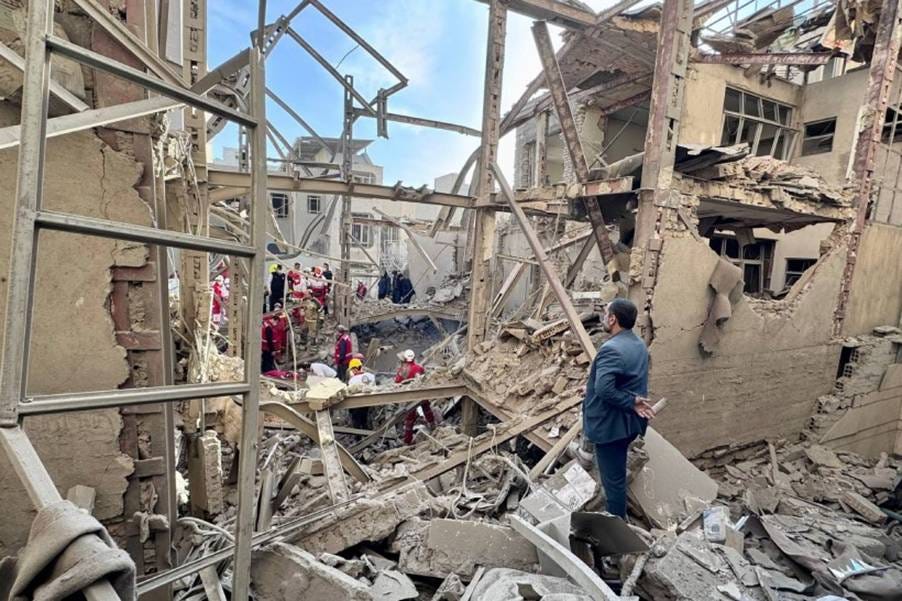
According to the Iranian Ministry of Health, at least 1,444 people have been killed and 18,551 injured in US and Israeli attacks on Iran since 28th February [2026]. Among the victims are [Iranian] Supreme Leader Ayatollah [Sayyed] Ali Khamenei and members of his family. Over 168 schoolgirls were killed in the bombing of a school. Around 40 high-ranking Iranian officials have been killed, including the Chief of Staff of the Armed Forces, the Minister of Defence and the Commander-in-Chief of the Pasdaran3. Thirteen American military personnel have died and around 140 have been injured, eight of them seriously. In Lebanon, Israeli attacks killed 773 people and injured 1,933, in a country with 830,000 displaced persons. In Israel, 12 civilians and 2 soldiers died. In the Gulf states, at least 16 people were killed by Iranian retaliatory strikes.
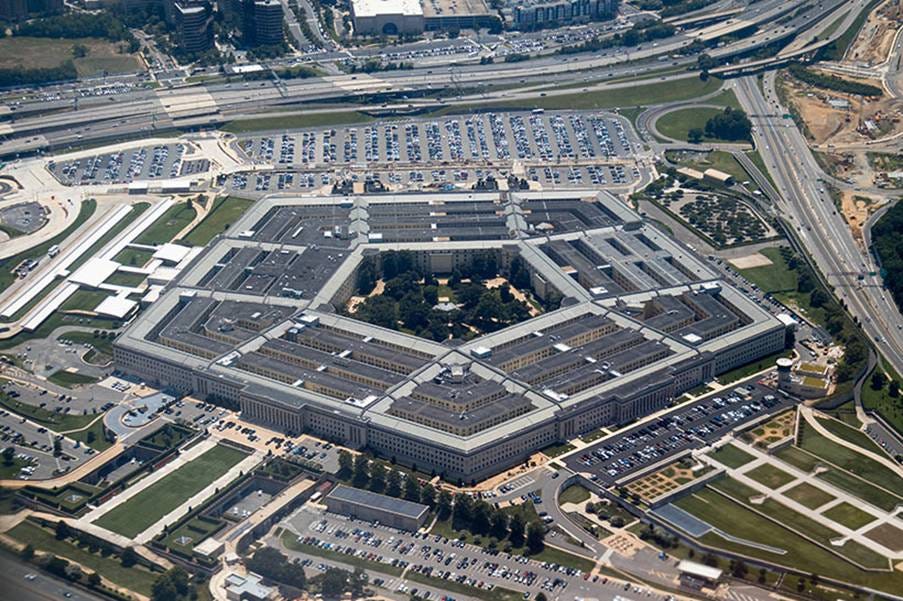
And the bill for the American taxpayer? According to the Center for Strategic and International Studies, US military spending in the first 12 days of the war reached around $16.5 billion – in the first 100 hours alone, the cost was $3.7 billion. The campaign struck over 15,000 targets in Iran.
Let’s pause on this figure: $16.5 billion in 12 days. It means the American taxpayer is funding this war at a rate of over $1.3 billion a day. It is public money – taxes, federal debt, future cuts to services – flowing to arms manufacturers, drone suppliers and defence companies. The very same companies in which the President’s children are investing. The very same companies whose share prices rise with every new day of bombing.
The Trump family profits from the war. The American taxpayer funds it. Iranian civilians, schoolgirls in southern Iran, American soldiers sent to die in the Gulf, the bombed Lebanese – they pay the price. There is a brutal equation in these figures: $16.5 billion of public money spent in 12 days on a war, whilst the commander-in-chief’s family amasses private billions through the companies that profit from that war. It is not a paradox. It is a business model. And it is the business model on which America in 2026 is built.
The full picture: six levels of conflict of interest
Let us summarise the system in its entirety, for it is only when viewed as a whole that it reveals its true nature:
First tier – Advance funding. The Gulf States seeking to destroy Iran as a regional power pour billions into the financial structures of the Trump and Kushner families: $2 billion from the Saudi PIF to Kushner, $250 million from the UAE into World Liberty Financial (of which $187 million went to the Trump family), $7 billion in Saudi property deals with the Trump Organisation, $400 million for a plane from Qatar, $200 million from the UAE to Affinity Partners.
Second level – The political decision. The administration launches a war against Iran, which US intelligence agencies did not consider an imminent threat. The President’s son-in-law, a beneficiary of Saudi and Emirati funds, leads the negotiations, the failure of which leads to war. The special envoy sitting at his side is co-founder of the crypto firm in which the UAE has invested 250 million.
Third level – Direct profit from the conflict. The President’s sons invest in military drone companies positioned to benefit from Pentagon procurement programmes and the massive use of drones in the war with Iran. The same companies are preparing to go public, multiplying the value of the family’s holdings.
Fourth level – Indirect profit. Oil prices soar past $110 a barrel, generating windfall revenues for the very Gulf States that have financed the Trump family — closing the circle and reinforcing the relationship of mutual dependence.
Fifth level – Deregulation as a multiplier. The administration simultaneously dismantles the control mechanisms that could hinder the system: the SEC suspends investigations into crypto firms linked to donors, the Department of Justice disbands the cryptocurrency enforcement unit, and Biden-era investor protection rules are repealed.
Sixth level – Political immunity. When a congressional body – from the same political party as the President – accidentally stumbles upon the Trump family’s financial network whilst investigating Chinese stock market manipulation, the mechanism grinds to a halt. The China Commission discovers that Dominari Securities, one of the firms under investigation, is linked to the president’s sons. The deadline for handing over documents passes. The response is evasive. Congress hesitates. The Dominari case is a microcosm demonstrating that the system is not just built to generate profits – it is built to be untouchable.
The lack of precedents
As Will Ragland, vice-president for research at the Center for American Progress, stated: “There is no historical parallel for this. Nothing comes close.“ Historically, US presidents have capitalised on their fame after leaving office – through books, speaking engagements and consultancy work.
But while in office, Presidents usually divest themselves of any financial arrangements that might constitute a conflict of interest or give the impression of exploiting their official position. Trump has not only failed to divest: he has built a parallel financial empire whose value is directly linked to the decisions he makes from the Oval Office. Kedric Payne, general counsel at the Campaign Legal Center, noted that the deals secured by companies backed by Trump Jr. appear ethically questionable even if the President’s son did not directly use his influence to obtain them: “Presidents are expected to avoid even the appearance of using their office to benefit themselves or their families financially.”
The question that is not asked
The Gulf States have systematically bought influence with the Trump family and the administration using vast sums of money, and now, for that modest price, they appear to have hired the services of the US military to start a war that they want, but which the American people do not. That is a strong claim. But the figures back it up. The war with Iran cannot be explained through the traditional categories of geopolitical analysis – not in the form in which it was launched, not with the timing with which it was launched, not with the absence of strategic planning that characterises it. It becomes explainable when you follow the money. When you map the flow of billions from the Gulf states to the presidential family. When one observes that the US negotiator with Iran is paid $25 million a year by Iran’s main enemy. When one notes that the President’s sons invest in military drones whilst their father orders a war fought with drones. When one discovers that the family’s investment bank, under investigation by Congress for facilitating Chinese stock market manipulation, is met with the embarrassed silence of the very lawmakers who had summoned it. When one calculates that the American taxpayer is funding the conflict at a rate of over $1 billion a day, and that that money flows to the very industries in which the presidential family holds stakes. In any other country, just one of the financial connections documented in this investigation would be enough to bring down a government. In the America of 2026, they are all present at the same time, all documented, all public – and none of them has any consequences. Congress does not investigate, or when it does so accidentally – as in the Dominari case – it backs down. The SEC has been neutralised. The Department of Justice has been stripped of its relevant units. The media report on it, but the figures are so vast and so numerous that they breed desensitisation rather than outrage. This is perhaps the most significant fact of all. Not the volume of money – the $7.3 billion in assets, the $187 million from the Emirates, the $137 million in Saudi commissions to Kushner, the billions in crypto, the billion-plus in drone contracts. Not the brazenness of the operations. Not the 16.5 billion dollars of public money burned in twelve days of bombing. But the total impunity with which it all takes place, in broad daylight, before a country that is sending its sons to die in a war in which the family of the commander-in-chief is a stakeholder.
Copyrighted images have been used for non-commercial purposes and fall within the scope of fair use.
Recently they revamped the website and, in the process, unfortunately, they may have broken links to “old” articles.
Initial Public Offering
Also known as IRGC (Islamic Revolutionary Guard Corps)